Franchise Killers: Four Fraudulent Sequels


Feature
We all know games need to make money. One of the latest methods that the industry has clung to is releasing a truckload of sequels. But it seems that this process is not without sacrifice.
Fable: The Journey
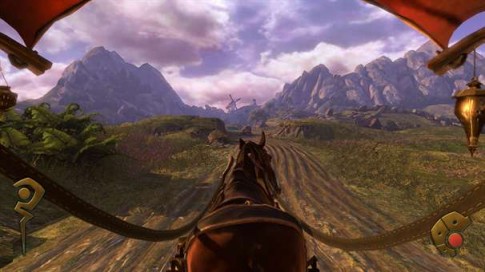
One franchise that seemingly has gone on to the rails is the Fable series. Fable has been Lionhead’s flagship game series since it was released, and Peter Molyneux has grown a reputation for over-exaggerating the potential of his games. The most famous of course being his claim that in Project Ego (the working title for Fable) if you carved your initials into a tree, it would remain there 10 years later in the game. Not only was it impossible to carve your name into a tree in Fable, but such passages of time changed everything, and nothing from your childhood remained. As the release of Fable proved Molyneux false, his credibility amongst gamers has been seriously damaged and every word that he has said since has been taken with barely even a pinch of salt. Despite that, the Fable series has always been a consistently strong seller; with Fable selling over 2 million copies; Fable II selling 3.5 million by 2010; and Fable III expected to reach 5 million sales in its lifetime. Sales of the latest title, Fable: The Journey, could be much lower however.
“Why such pessimism?” I hear you cry. Well, because they have alienated approximately 82% of their possible market. The Journey is a Kinect-exclusive title, meaning that the estimated 500,000 PC gamers who will buy Fable III in its lifetime can disregard it right off the bat, and the 45 million Xbox owners that do not have Kinect can kiss goodbye to the game unless they are willing to fork out for the peripheral. On the basis of the gameplay we were shown, I am not sure how many people will want to purchase the £100 peripheral just for this game. With Molyneux himself admitting that the footage was ‘a mistake’, the gameplay we were shown was not impressive. Whilst appearing to be on-rails, Molyneux has literally exclaimed with exasperation that the game is not on rails. What it boasts is exploration of Albion via a horse and carriage, with the player ‘actively controlling’ the path they take, allowing you to theoretically explore wherever you want, provided that the road infrastructure in Albion is wide-ranging and maintained correctly. I jest, but roads and tracks seem to be a necessity. This naturally limits free roaming, but Fable was never about total free-roaming, so the restriction of movement is not a big problem. The problem is with the control scheme.
The Fable games have always been, for the most part, intuitive and suited to the console experience at least. This game, however, completely removes this control scheme and replaces it with physical hand movements for magic and the like. Essentially, it is a first person magic game; Oblivion if you had to flail your arms about like a lunatic to use the spells, if you will. Whilst there is no news on levelling or other RPG staples, the mere fact that they have chosen to make the game purely for Kinect, which is marketed primarily at the casual gamer, has diluted the hardcore experience of Fable into a middle-ground where it will find few fans. I would certainly be apprehensive to buy the game based purely on the E3 showing, and I am sure that I am not alone in this.
Prey 2
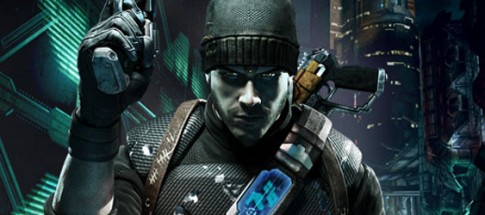
Speaking of apprehension, cue another franchise that seems to have lost its way. Back in 2006, an 11 year development cycle finally culminated in the FPS Prey being released on PC and Xbox 360. The game was impressive - portals as a gameplay device were not really construed at this point; Portal had not been released yet. Combining this mind-bending mechanic with fantastic graphics and a decent story was impressive, even if the multiplayer component of the game was somewhat lacking. When a sequel was announced in 2008 by the mysterious Radar Group, (the phoenix rising from the ashes of 3D Realms) it seemed like more sci-fi shooting action, coupled with more portals and another gripping story was on its way. However, development was stalled and Zenimax, the parent company of Bethesda Softworks, purchased the rights to the sequel in 2009.
After another 2 years of stagnation, Bethesda finally officially announced the sequel in March 2011. With the promise of Tommy, the Cherokee soldier-turned-mechanic, returning for more crazy adventures - I was quite excited at least. However, watching the footage of Prey 2 at E3 pushed me to the ‘Brink’ of despair. Whilst your paths will undoubtedly cross with Tommy (Killian, the new game’s protagonist was abducted at the same time as Tommy), the new Bladerunner-esque world has no room for portals anymore, with the mechanic being completely removed. Bearing practically no resemblance to the first, the game reminds me of Mass Effect mixed with Brink; with an additional mission selection and an open world combined with parkour mechanics that Mirror’s Edge would be proud of. Whilst this both looks and sounds good, it bears little or no resemblance to the franchise that it claims to be a part of. If the game had been renamed, there would be almost no questions about why it is not a part of the Prey series. Unfortunately, the game is running away from its roots but dragging the name along with it. Getting down to the core of the problem, quite simply this is not a Prey game; it is an entirely different game that happens to have cameos from Tommy in it. You cannot run away from that.