NBA The Run

Review
A surprisingly modern feeling throwback
by Jordan Helsley
reviewed on PC
Run The Court
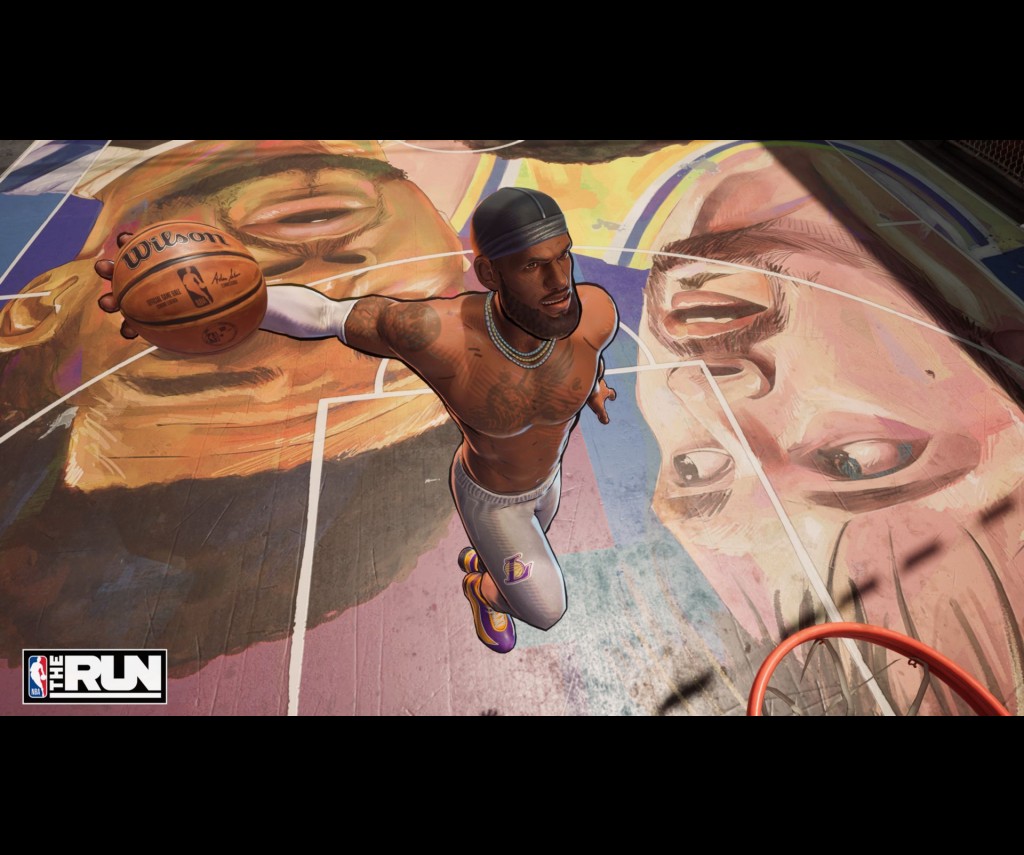
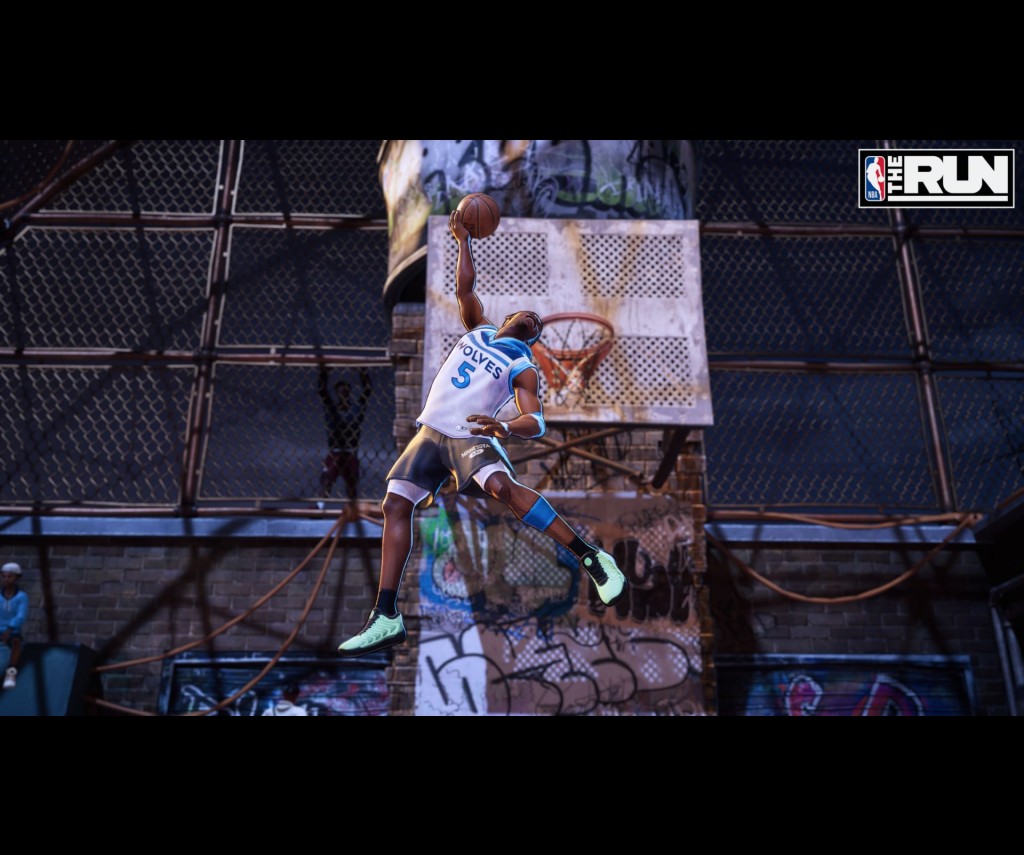
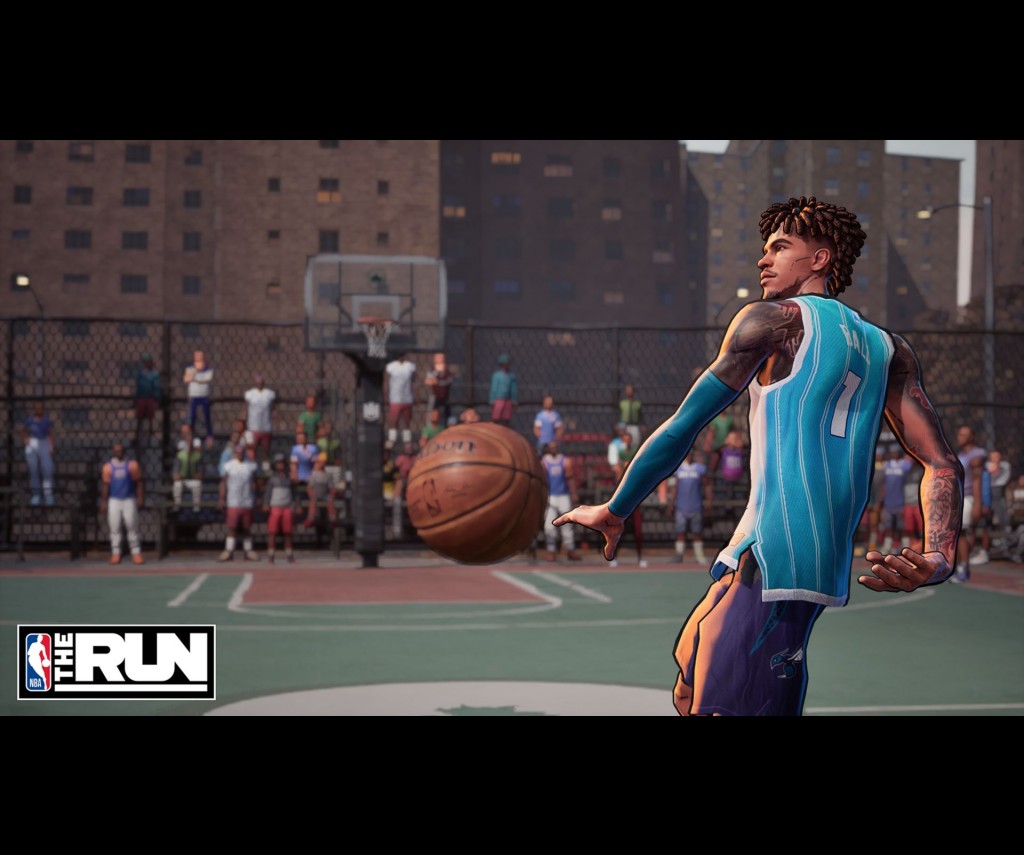
Contrary to the name that sounds like it's creating a shared universe with Need For Speed The Run, NBA The Run wears the legacy of the arcade titles that inspired it on its branded arm sleeves: The fireballs, arm-flailing steals, two-arm shoves, and high-flying dunks of NBA Jam, and the variable rule sets, 3-on-3 matchups, dribble moves, and ability systems of NBA Street. For the uninitiated, it's fast, frantic, and often unforgiving. But it also feels great to play. The ball leaves a trail of fire when the jump shot has perfect timing, there's a slight rumble and "bone-snap" sound when executing an ankle-breaking skill move, and players move fast around the court without ending up in "turbo mode" territory. Shoves take just enough skill to pull off, and come with a significant stamina trade-off. Shooting the ball, something that gets left behind a lot in the genre, feels great, too, with each player operating on a different timing. On the flip side, getting blocks on those shots (or dunks) feels best of all. Waiting out the opposing players' pump fakes only to send the ball backwards once, or even five times in a row, almost feels worth the cost of admission alone.
Get To Know Ball
To get it out of the way: NBA The Run is an online-only game. The titular "Run" is a pseudo-roguelike, faux 16-team tournament that players enter every time they hit Play. Each game matches two teams with a random selection of rules. Sometimes it's standard 1 and 2 point shots, other times it's 2s and 3s, and sometimes dunks are worth 3 points, while anything else nets just 1. These incentives to play the game a certain way, and thus get better at defending a certain way, works to avoid each game from devolving into an 'alley-oop fest' (by far the strongest scoring option in the game) or whatever meta develops at a particular time. The tournament structure feels like a gimmick, but it's actually slightly worse. The amount of XP and credits (referred to as Cred, the game's currency) that accumulates after each game balloons the more games in a "tournament" you win. Game 1 gets, say, 60; the second is 140; the third is 260, etc. Instead of offering some incentive for winning, or whatever they had in mind for that, it simply arbitrarily slows progression through the game's levels based on whether you get knocked out in game 1 (which I did a ton when first starting) or game 4.
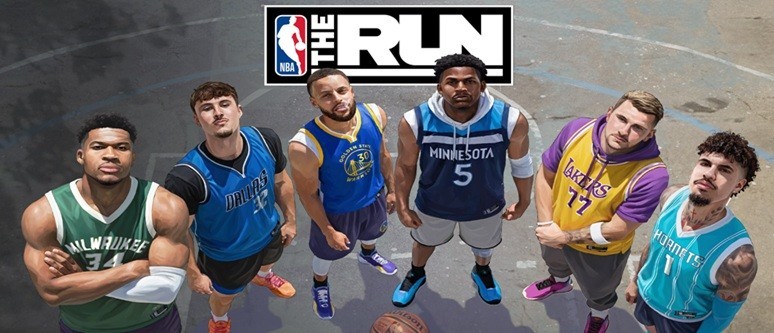
To the game's credit there are (as of right now) no micro-transactions, which could partly be due to licensing for the pro players and the limitations of cosmetics around them, but there are five unlockable "street ballers," which are not beholden to real-life likenesses (and also only unlockable by levelling up). You're still spending credits in the store, just on legacy versions of existing players (like rookie LeBron, SGA, etc.), dunks, and profile accoutrements. The street ballers have plenty of personality and are fun to play with, which makes having to grind out credits that much worse. And, for such a fast-paced game, the reward screen after a run takes a good 15-20 seconds too long just to tally up those new balances. A minor annoyance, but the sluggishness of the menus overall becomes grating by hour 20.
New Rulebook, Same Game
Mixing up the rules definitely offers more variety to what could otherwise be rote games of acrobatic basketball, but it has mixed results when joining a team of random players, especially because there's no way to communicate with each other. Some games you end up with teammates who refuse to pass the ball or launch one-point shots from deep when alley-oops are worth three times that amount, but this is the nature of online play. Friends noticeably elevate the experience, but if you can't convince any to join up, there's also a solo tournament mode. Honestly, the AI is fairly useless on the whole, but when both players have the same handicap, it still ends up a more balanced matchup than it can otherwise.
Accompanying the scoring rules are limits or boosts to the game's ability meter, "In The Zone", and the score to win. That "alley-oops are worth three points" rule set I mentioned? Score 12 to win. The classic basketball (2s and 3s) mode caps at 30. The length of these matches can vary quite a bit, which is something to keep in mind considering that when you match up for a game, you're actually committing to up to 4 games. While they're rarely ever "long" in the conventional sense, I've seen games end in under a minute, or last about 5. I get they want these "tournaments" to have consistent teams, as in the two players you start with are the two you end with, but taking away one more layer of this guise, and just starting the next game with each press of the play button would go a long way into making it feel less like a commitment if you just want to get in and out real quick before an appointment or something.
Addressing Old School Problems
NBA The Run has not completely rid the genre of long-standing problems like spamming the steal button to swipe the ball at will, particularly when skilled players defend more inexperienced players. That said, most offensive and defensive moves have counters, even if they're not always consistent. Stealers end up on the ground with a well-timed dribble move. Aggressive blockers can get rained on by a pump fake or two. Passing the ball quickly and often negates about 90% of defensive skill moves, whereas being patient and sticking to a man negates even that. The systems are a lot deeper than they seem, and mastering them, again, feels pretty good in a vacuum. I still haven't figured out a reliable defense for alley-oops, though.
Theoretically, even though each NBA player has about a dozen stats, the playing field should be fairly level. One player's max block stat doesn't seem to be that much more effective than another's 2/5, at least for jump shot defense. Timing is more important than anything, but sometimes it feels easy to manipulate, or worse, obscure in how it was off. I've had games where opposing players do nothing but dribble moves all the way down the court, knocking my player to the ground when he tries to steal, but when I try an unguarded move myself, I just lose the ball. In some games, players seem to steal the ball effortlessly through the "guard ball" move, and others where it seems like the mechanic just doesn't work at all, even on an AFK player with the ball in their hands. While the matchups should end up balanced, and there appears to be no rubber banding to keep things close, games can appear to be much more one-sided than they should.
Speaking of the inspiration, NBA The Run also features a fairly prominent announcer voice. To his credit, he's definitely not trying to be Tim Kitzrow, but it might have been better if he had tried. It lacks that manic energy, gets old fairly quickly, and isn't nearly as specific as modern technology would allow. It's definitely a game better played with a podcast or some music on.
Run It Back
The thing about NBA The Run is, despite its flaws, I can't stop playing it. I will happily play a handful of games at night on the Steam Deck to get my fix when I get the itch. Several nights devolved into "one more game" for hours, which doesn't happen often. I never ran into issues filling up a team, either. The player base seems relatively strong thanks to crossplay bringing in console players. Bots have a distinct icon so you know what you're getting or dealing with, and I've only seen them when a player leaves mid-game or mid-tournament.
NBA The Run will live or die based on the adjustments it continues to make post-launch. Several improvements and bug fixes have already made an impact, but there's (always) more to do. The problems are fixable, but they detract from the experience right now. It doesn't feel good to waste time watching a measly 60 XP stack up after a first-round exit when the time is better spent loading into a new run. It doesn't feel good when the game tells you your max-handling player just fell down performing a dribble move with no one around and full stamina. But it feels good to play overall. No matter which player you like most, you're not pigeon-holed only into one playstyle. It simply feels good to learn the moves and counters to get better at the game. Basically, it feels great to play a game, and a little less great to play multiple in a row, especially when you're stacking losses. It's telling that one of my biggest issues with the game is the speed at which it lets me play the next tournament, after all.
As always, follow Hooked Gamers on Instagram for news updates, reviews, competitions and more.
7.2
fun score
Pros
Modern arcade basketball that feels enough like the games of yesteryear with systems that are deep enough to legitimately learn.
Cons
The menu experience is sluggish, grinding out levels is slow enough to be frustrating unless you’re consistently winning multiple games in a row, and the lack of communication options with your teammates is frustrating when trying to get on the same pag