My Hero Academia: All's Justice

Review
Plus Ultra Pugilism
by Camrin Santchi
reviewed on PC
Going Out With A Final Smash
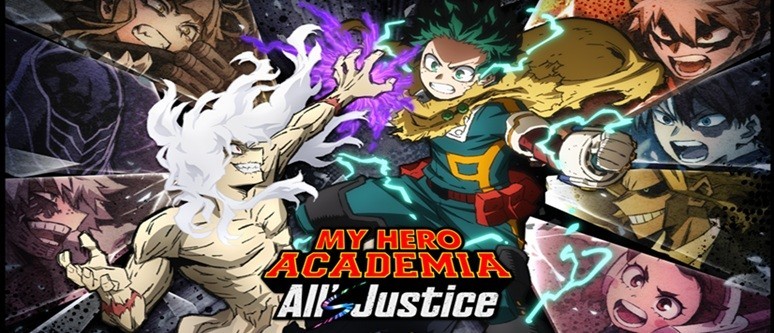
If you're a fan of shonen anime, you've almost certainly watched or at least heard of My Hero Academia. Inspired by Western Superhero Comics, this anime originally began airing in 2016 and finished its final season just recently at the tail end of 2025. Fighting games are the shonen genre's favorite way of being adapted into video games, and My Hero Academia: All's Justice is no exception to the rule, a 3D arena fighting game semi-similar to the Naruto Ninja Storm games or the recently released Bleach: Rebirth of Souls. All's Justice covers the events of the final season of My Hero Academia, typically referred to as the Final War Arc.
Virtually A Hub
All's Justice sets up in a virtual hub world of sorts, acting as a virtual reality training space for the students of Class 1-A to prepare themselves for the experiences they will be facing. The simulation also includes data on previously faced villains, Pro Heroes, and more, so that there is a wide array of characters to face off against. The gameplay is dedicated to multiple different modes, all of which can be accessed either via interacting with the hub or by using Izuku's smartphone.
The Story Mode is exactly what it says on the tin, following the events of the Final War Arc by placing the player in the shoes of some of the more pivotal characters like our protagonist Izuku Midoriya, some of his allies and rivals like Ochako Uraraka, Shoto Todoroki, or Katsuki Bakugo, and even letting the player take the reigns as the villainous Tomura Shigaraki for a portion of the story.
While replaying the climactic arc of the series is a very heavy draw, the real point of interest were what are referred to as Team-Up Missions. Set primarily within the virtual hub world and training simulation, these are miniature segments of the game that let you explore the hub and complete missions for other character. The original content can be quite charming and helps flesh out interactions between some of the many cast members. You traverse the hub to complete tasks for characters in order to receive their assistance, either as sub-in characters to round out a team of three for combat, or to buff your stats in specific, Some characters are even are necessary as pre-requisites for others. Denki Kaminari, for instance requests you to bring Katsuki Bakugo or Eijiro Kirishima to complete his quest, while others like Kyoka Jiro can be completed without trying to find another Hero first.
A World of Heroes (And Villains)
All's Justice has a very large cast of characters, 64 by this reviewer's count, so long as different iterations of the same character to denote different movesets through the series are considered as separate characters (there are four or five Izuku Midoriyas, as an example). Many characters have a very different feel to them, some seeming bulkier and slower, while others feel frailer but faster, others have ranged options by utilizing their Quirks or superpowers, but others have to find a way to clear the distance in order to start wailing on their opponents.
The Story Mode of All's Justice is a good way to get introduced to a lot of the different characters, since the mode places the player in the shoes of multiple different characters. This also is where the benefit of the control scheme comes in. While it can feel a little floaty, and not just because of the zero gravity mechanics of at least one of the characters, it has a particular draw that this reviewer enjoys.
All's Justice has a button dedicated to standard attacks, and two separate Quirk buttons, which can be combined in and around each other to create combos that utilize the unique capabilities of each character. All's Justice does also offer an automatic mode where just pressing the attack button can string combos together. Most players may deride this option, but something that this reviewer thinks make this stand out in a good way is that the game shows inputs on the top left of the screen while you play, meaning even if you are using the automatic mode you can start to pick up some of the specific ways attacks lead into each other, or the way that directional inputs can change up your attacks.
This is probably one of the better ways to make use of an automatic and manual mode in a fighting game, since players can subtly pick up on techniques even in automatic mode. On the top right you can even see the move inputs of the AI, which can allow players to learn certain moves and whether to try countering, dodging, or otherwise brace for an impact.
Seen This Before
One issue with All's Justice might just be the inconsistency of how some of the events are portrayed in the Story Mode - sometimes there's a 3D rendered animation, other times it reuses brief clips from the anime, and other times it appears in a comic book style. The transitions between these points can be a little jarring, but some of them end up flowing very nicely as well, so it isn't necessarily enough of a negative to fully count against the game. Even when individual scenes look nice, the stylistic shifts might make the story a bit less cohesive to some players.
The gameplay also limits the scale of some of the major events, the overwhelming army of 'Dead Man's Death Parade' is depicted by having to fight three of the same guy at once rather than the sheer alien hoard that beat down the heroes in the anime, and Shigaraki's rapid mutation is portrayed more through his moveset rather than a massively scaled event that the Heroes needed to constantly push back against lest they lose their very limited chance at victory. This makes sense for the gameplay, but in trying to adapt these massive scenes they come across with much less impact than they would otherwise have.
Go Beyond!
All's Justice overall is a solid fighting game with a wide cast and combat that feels rewarding to try and figure out. There are some issues like the scale feeling smaller than intended in the original adaptations, or the presentation being a bit inconsistent, but fans of the My Hero Academia franchise will definitely be excited to both reexperience the events of the Final War and make use of the large array of characters, including several that were not in previous My Hero Academia fighting games.
As always, follow Hooked Gamers on Instagram for news updates, reviews, competitions and more.
8.3
fun score
Pros
Wide Cast, Rewarding Combat
Cons
Reused Audio and Video, Scale feels Smaller for Pivotal Story Moments


