Teknmotion Pulsewave Headset


Feature
We got our hands on their most expensive PC gaming headset, the Teknmotion Pulsewave, and put it through its paces.
The Pulsewave headset can be connected to its source in a myriad of ways. We’ve listed them below, as well as our thoughts on them.
1) Standard Mode: Both 3.5mm jack cables inserted into respective sockets on PC (this setup gives you sound and the mic): works straight out of the box, no drivers required, works perfectly
2) USB Mode: USB cable to a free USB port on the PC (sound, mic, vibration and lights): works after the drivers are (automatically) installed, noticeable static in headphones
3) Standard + Vibration Mode: Both 3.5mm audio jack cables as well as the USB cable connected to PC (sound, mic, vibration, lights): works with noticeable static
4) Virtual 7.1 Surround Sound Mode: USB cable to a free USB port on the PC, V7.1SS drivers must be installed on PC (sound, mic, vibration, lights, and Virtual 7.1 Surround Sound): works for music, buggy and glitchy in games. Also, noticeable static
5) PMP Mode: one audio jack cable to PMP (sound): works as advertised
6) PMP + Vibration mode: one audio jack cable to PMP, (included) battery pack hooked up to connector box (sound, vibration, lights): works as advertised, battery pack is quite annoying in practical use (plus, passers-by will give you the most awkward of looks when they spot you wearing your flashing, vibrating headphones)
Great Build Quality...
Even when it’s just sitting in its box, the Pulsewave headset looks menacing, an impression which is fortified when you remove it from the packaging. The headset feels enormously heavy and durable, and yet comfortable. The build quality is, overall, good. Everything feels solid and well-built, except for one exception. During extreme bass testing, we noticed that in the right headphone, a ratcheting noise can be heard, as if a piece of plastic has somehow become loose and is touching one of the speakers or vibration motors (see below for more on these). Beyond this admittedly minor flaw, there are no gaping seams or cheap-feeling parts.
However, the headset is very heavy, mainly due to the large speakers and motors. It took us quite some time to find a setting for the headband length where this weight was evenly distributed, and even then, the weight became noticeable after a few hours of use.
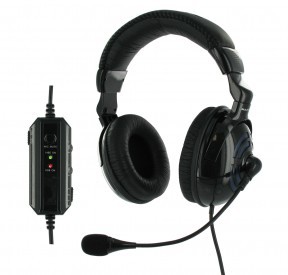
Sadly, we had to find out that the Pulsewave’s ear cups are not large enough to allow for very long (>3h) periods of uninterrupted use. Although wearing the headset was not per se uncomfortable (beyond the rather hefty weight), when removing the earmuffs, pain would sometimes immediately shoot into both ears, as if they had been cramped together and compressed in an unnatural fashion. We can only assume this is due to the Pulsewave’s too small ear cups. However, it should be said that this occurs only after lengthy wearing of the headset – You should be fine if you take the headset off every now and then to relieve the pressure from your ears (if you experience any at all).