Dave Georgeson on Mage Knight: Apocalypse


Feature
Inspired by the Mage Knight trading card game, Apocalypse looks to unleash a whole new experience on Mage Knight fans. We talk to Dave Georgeson to find out what the game is about.
Dave: The game is an action RPG, first and foremost. That being said, we really wanted to bring more story to the genre and set up things so that the game satisfies *both* the combat player and the RPG “explorer” types that want to find out more about the world. Do you want to know more about the world and understand the plotlines in greater detail? Then go talk to the various NPCs in the world. Many of them have lots to say and you can learn as much (or as little) as you desire.
Your sidekicks (the NPCs traveling with you in your adventure party) often say things to you and react situationally to what’s going on in the world, plus they have a lot to say in various cutscenes, piping up with stuff whenever a subject touches on one of their specialties.
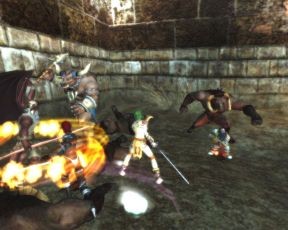
In other words, you probably haven’t played an action RPG that’s similar to “Mage Knight: Apocalypse”. We’ve added a lot of elements to it that are different and unusual in order to make it even more compelling as a game and adventure.
Hooked Gamers: The game doesn't allow the player to manage NPC inventories. Most RPGs 'do' give you this freedom. What was the reason for you not to incorporate this in the game and what does this mean for the development of NPCs?
Dave: Basically, there’s a LOT for you to manage personally with your character. Learning all your new skills, figuring out how to use them best in combat, managing your own inventory, etc. is a lot to handle as a player.
Plus, we wanted the single-player and multiplayer cooperative experiences to play very similarly. Since all players in a multiplayer game would be... well... players, you wouldn’t be able to manage their inventories, so we strove to balance the game in such a way that you would be busy enough to not even *desire* to manage their inventories.
In this, we think we’ve succeeded. When playing a single-player session, the sidekicks naturally manage their own skills, using them intelligently and appropriately, and when you (the player) go to a store to upgrade your equipment, the sidekicks also upgrade their equipment at the same time.
Hooked Gamers: In combat, things can get a little hectic and in many games it can be difficult to control the other characters in your party. What was set out to be a glorious battle can actually become a struggle to keep a certain character alive. What sort of instruments does the player have available to feel in control?
Dave: Sidekicks are easily managed by using a simple set of three options. Those options are: Attack, Follow, and Stop. Most of the time, the sidekicks will be in “follow” mode. In this mode, they’ll follow the player in an alert fashion, reacting to dangers as they present themselves, defending themselves and attacking monsters when attacked.
But if you see a camp of enemies ahead, you can direct your sidekicks to attack easily by clicking their portrait, hitting the “attack” button and then clicking on the target monster. Want everyone to attack that target? Then don’t select any of your sidekicks (which actually selects them all, but doesn’t require a click), hit the “attack” button and click the target. All your sidekicks will then attack that target. (This is very useful against big and strong enemies.)
Are your sidekicks pursuing enemies as they flee and you’re worried that they’ll get into trouble? If so, you either click “follow” or “stop”. (Telling them to follow will order them to return to you, where “stop” will command them to just wait in that position.) Want to scout ahead without your sidekicks? Tell them to stop for a bit, and then command them to follow when you’re sure the coast is clear.
There are lots of easy ways to use these commands and the options are intuitive enough that you’ll be commanding your party without even thinking about it after you play for a bit. Those three simple commands, combined with intelligent AI for the sidekicks, makes them very useful. And that’s a good thing, because we set up some extremely large battles along the way since you have all that help along with you.