The Mound: Omen of Cthulhu

Review
Cosmic horror extractions from an old-school lens
by Jordan Helsley
reviewed on PC
H.P. Lovecraft wasn't always considered one of gaming's most influential authors, even though his themes are older than 16-bit. Lately, adaptations have become so commonplace that sanity mechanics, loss of player agency, and hallucinations all threaten to overtake the inspirations of Tolkien's Mordor, Doyle's detective novels, and Miura's grimdark fantasy in video game prominence. The downside of this increase in Eldritch horror inspiration is an inherent need to create something bold and different to separate from the pack and avoid typical "old tentacle God" tropes, all while trying to visualize that which is "unfathomable" Enter The Mound: Omen of Cthulhu. It understands both the baggage of the extraction genre and its key recognizable elements. It also draws from a story that's overlooked among Lovecraft's bibliography, but is still important for clarifying his world beyond those tropes. It's the first (up to) 4-player, PvE extraction game from ACE Team, a small studio already known for surreal visuals and bizarre stories, and they feel right at home. Don't let the genre fool you, though. The Mound isn't chasing a trend, it's distilling it, harvesting it for parts, and putting together something that feels fresh because it feels classic and is more appealing because of it. Even solo players can get in on the horror-filled fun. A single AI NPC is on by default, and he helps with combat and feelings of isolation, even if he's useless at looting.
The Story So Far
The Mound: Omen of Cthulhu follows its eponymous story pretty closely. Players take control of explorers who call a galleon off the coast of the mainland home and a base of operations as they search for both treasure and the location of The Mound at the behest of the ship's captain. The captain draws up contracts for the players to complete by braving the horror-filled jungle and returning with whatever they can get their hands on. To progress the story, the most valuable loot in many locations is a logbook, which leads the crew closer and closer to The Mound, and the alleged infinite riches therein.
Most of the story is doled out through these logbooks and the accompanying narration that unlocks with them, but also in the game's guidebook, as players discover knowledge through their jungle adventures. This trickle of information rewards both exploration and revisiting locations to pick them clean. It also means that players will likely have encountered some foe or another multiple times before getting any tactical tips beyond pure intuition, like the big black bird with giant red eyes, which I mostly understood but was missing a key component in its mechanic before I had the guide entry. In the end, there's a dozen-or-so different enemy classes to be on the lookout for, which feels more like other co-op, "horde-style" shooters than anything else, and they all come with guidebook entries. The story is well written and well voice-acted, which helps sustain the gameplay loop, but as it came to a close I found myself wishing for more, rather than the ending it delivered. The final mission itself was a great change of pace as it switched up the formula and forced my group of explorers to work together on a deeper level to solve and survive a map-wide puzzle, but the final cutscene gave a resolution that was much more hopeful than the world seemed like it would allow, and actually set up the prospect of playing the game afterwards extremely poorly. From a narrative aspect, the final mission has to remain undone for any more excursions into the jungle to make sense.
Saltlines and Landmarks
The story of The Mound: Omen of Cthulhu and its namesake are perfectly positioned for the extraction-style gameplay loop. The captain constantly wants more gold, more rare treasures, and more clues to the location of The Mound, and the players, as perilous as their missions are, begin to find much more. To make subsequent contracts easier, there's a very real pull to understand the horrors of the jungle more intimately, even as the variety increases nearer to The Mound. Likewise, scouring each map quickly becomes enticing, not only for the treasures that add up to each contract's quota, but also for lost survivors to rescue, cult artifacts to find and later use, and a plethora of environmental storytelling details.
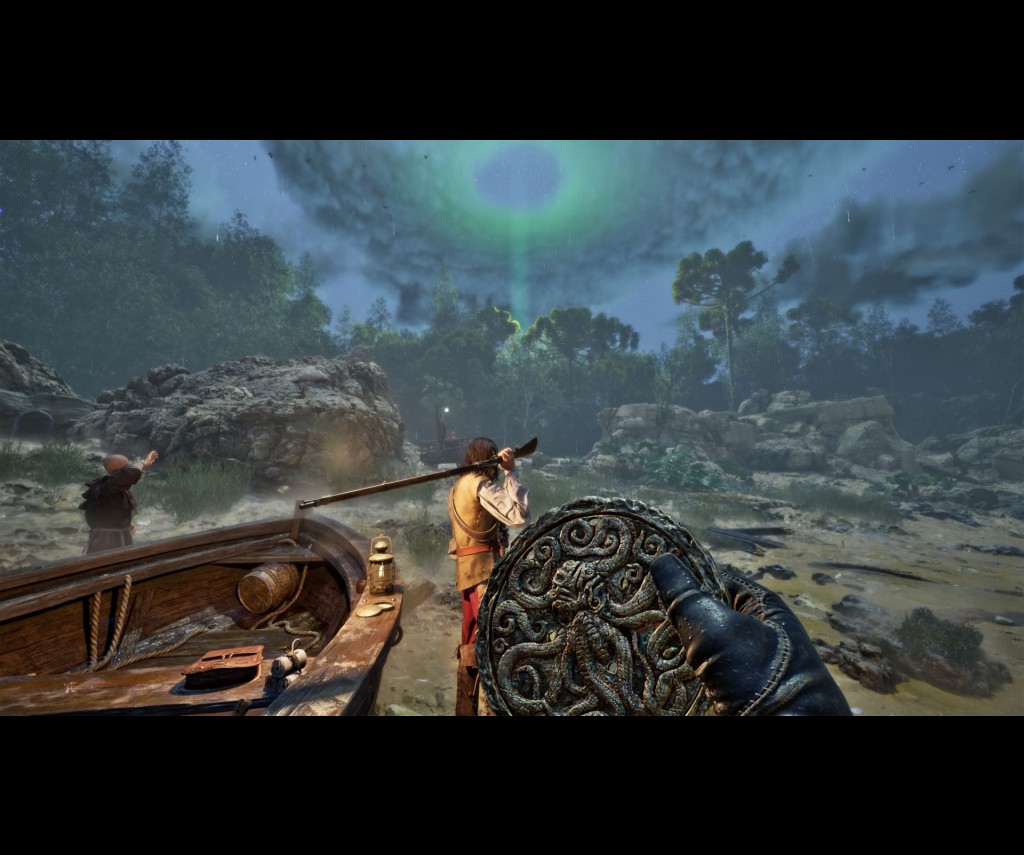
The atmosphere of the jungle is extremely well executed. Labyrinthine paths run to various depths in each bespoke location, putting real weight on the player's own cartography skills off the beaten path. In my first time with a particularly large map, I found myself leaving one of a pair of helpful mushrooms attached to trees just to leave a breadcrumb of my own path. At other times I dropped valuables in strategic locations, both freeing up my inventory space as I ventured deeper and incentivizing myself to remember their locations so I didn't come back empty-handed. I found myself using the clear, daytime runs to increase my familiarity with the locations when I could, so that when dynamic weather rolled in I felt better prepared. Disappointingly, nighttime runs feel just as bright as daytime ones, but the rest of the weather hits hard. Fog kills visibility, rain stops wet firearms from igniting. When the jungle starts to 'wake' and the sights and sounds ramp up, though, having an escape plan is critical, no matter the weather. This place is unforgiving of mistakes.
The Cart Is Your Lifeline
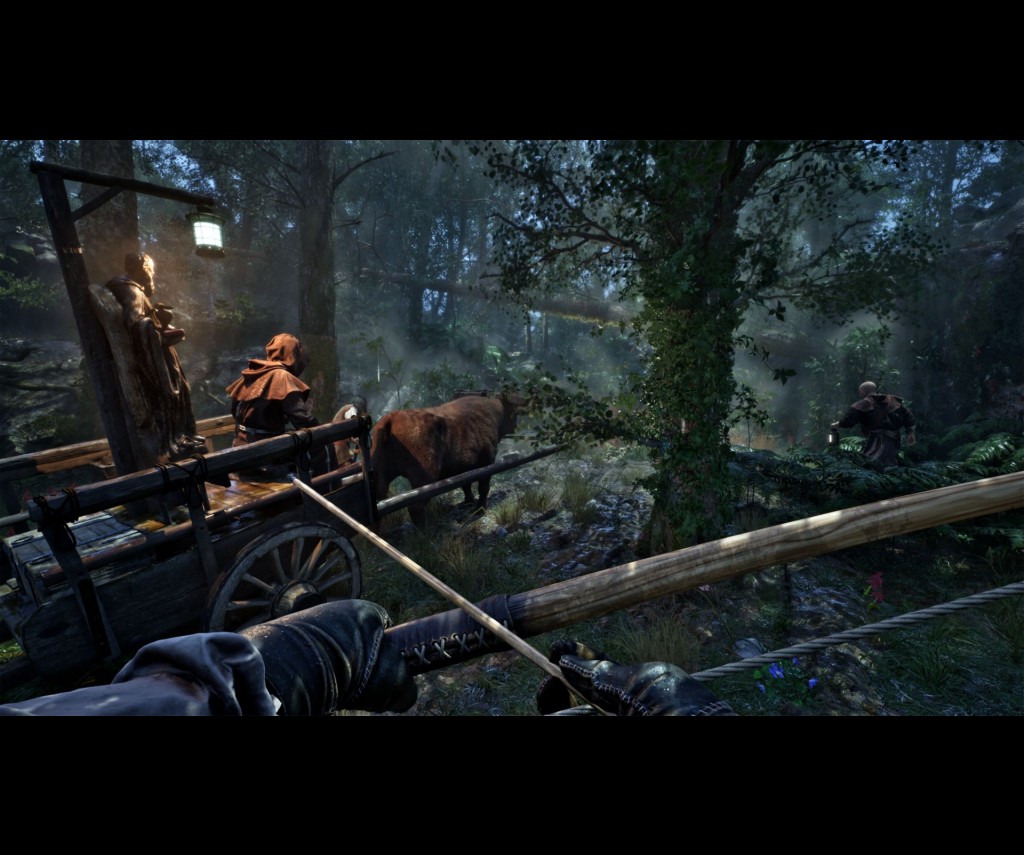
The game varies missions over time, but most contracts share the same baseline: the captain sets a dollar quota, gives out equipment, and the players pick the location. Expeditions are usually joined by a clergyman on an ox cart. He's a moving storage box that more than triples a player's six starting pockets, forcing a balance between gear and empty loot space when away from it. This cart is a smart, critical element of the gameplay loop. As he follows the players through paths barely wide enough for his cart, struggling against his own pathfinding weirdness, he lays down a line of salt leading back to the start/exit that becomes the primary reliable landmark. After battling the jungle, both literally and navigationally, it can be an incredible relief to find this salt line for at least an indication of how to get out when it is time to go. If the enemies of the jungle are docile, the expedition could almost be considered finished at that point, but if they're aggressive and giving chase, it becomes a tense run of crosschecking that path with other landmarks to ensure you're following the line backwards rather than forwards, or navigating side-by-side paths caused by the cart doubling back for one reason or another.
It can also be a boon to spot the cart itself. He doesn't help in combat, but when collecting a logbook, a survivor, or one of the game's rare upgrade materials in the form of a Huemul (deer), all things that don't fit inside the pockets, offloading to the cart ensures free hands and quick feet. Or perhaps the cart holds all the healing items or extra ammo because that was a tradeoff that felt necessary at the time. It's a delicate balance of exploring the space, often via side paths, and not losing sight of that cart for too long.
Sanity Has Teeth
The Mound: Omen of Cthulhu is rightfully not content with giving players a static, deadly jungle to contend with. As players interact with the world and its denizens, the jungle changes, not in layout but in aggressiveness. Stealth is a key skill, as making noise via running too much, activating certain enemies, or carelessly breaking tree branches makes the expedition worse (in a good way). More enemies crawl out, and it becomes very clear that combat should be kept as a last resort. For the most part, weapons, both melee and ranged, have purposefully slow animations or inaccuracies, but occasionally the feeling extends to a sluggishness in the actual inputs. Trying to fire off a few quick arrows in succession inevitably ends up with the character nocking one without aiming first, which is a surefire miss. Axe swings in a frantic moment can feel entirely disconnected from inputs, unless the next input follows a distinct pause. These moments go beyond the design of the game and enter bug territory right when it's needed most.
Even a perfect stealth run can be undone by an individual character's sanity. Spending time away from the group, and away from the cart, both impact this invisible meter, but the effects are usually clear. The rustling of the bushes can become sinister growling, enemies can materialize and disappear in an instant, or a doppelgänger of one of your expedition mates blows a horn close by, utilizing one of the game's built-in communication tools designed to identify the location of the cart in an emergency (and increase the alert of the entire jungle in the process) to lure the real players in. In one tense moment, besieged by four or five monsters and running for the cart's healing items, I spotted yet another enemy closing in ahead. I fired the only rifle round I had left (it was an emergency, after all) directly into its chest, only to hear my friend cry out over voice chat that I'd shot him. I didn't mean to. The jungle toying with the player is what makes playing The Mound: Omen of Cthulhu thrilling, especially as contract difficulty increases and missions change, like one that requires players to hunt down a big monster, but the pressure and possibility of each expedition at the outset are their own incentives.
No Gear Fear
It becomes clear almost immediately how the game manages the player. Contracts have that loot quota, or a logbook/survivor that needs finding deep into the level, and the jungle itself can maintain the explorers' presence for five in-game hours before "waking" (i.e. increasing enemy numbers). That timer, combined with rising value requirements, pushes players to move fast, even as everything else in the game wants them to slow down. It is a relatively simple loop, but finding the perfect balance feels great, and adapting it to new enemies and situations gives a real feeling of reward. Freeing contract objectives from specific locations also allows a much more freeform style of play when returning to locations, too, so it avoids typical issues of being forced to return to a particular map to search an area you've obviously cleaned out for an item that was obviously placed after the fact.
The game's loot philosophy also keeps it from running into issues that other extraction games can have. A strict PvE structure helps, but the real fix is the predetermined starting equipment and almost no base management. Gear fear changes from worrying about losing it all, to trying to gear up before your crew takes the good stuff. Everything you leave a run with is either an unlockable item or lumped in with the rest of the loot to increase its value. The worst thing that can be lost are your spent tokens, the money that the captain hands out to his loyal workers to use at the company store. These tokens are used to buy extra bandages, weapon upgrades (like higher damage and durability), and items like a mostly-useful map, so even if everyone is starting an expedition with zero of them, the weapons themselves, armor, and stronger health items are given upon accepting the contract. It feels more like a classic game design philosophy than most. Players level up and gain perks like a few extra inventory slots or knife skins (and tokens with many of them), and any of the prized collectables either advance the story or become purchasable items before a run, rather than sitting in an inventory for fear of having to find another.
The Mound: Omen of Cthulhu has a cumbersome name, a name that feels more on-the-nose than it needs to be, but it earns its place among Lovecraft adaptations and intelligent reexaminations of a rising-yet-polarizing genre in extraction games. There are issues with combat that can become frustrating (because no one ever wants to feel like their button presses don’t register) and annoyances like the mission-critical cart pathing in baffling directions, but I grew to notice those less as time went on. It made up for them with atmosphere, with a fun risk-reward structure, and by avoiding frustrating loot management. I spent about 20 hours mainlining the story to see as many of these handcrafted locations and monsters as possible, and genuinely enjoyed it more at the 'end' than in the beginning. But surely I'll be going back, both for things I bypassed in my quest to beat the story, and also just to see what other surprises it has in store.
As always, follow Hooked Gamers on Instagram for news updates, reviews, competitions and more.
8.0
fun score
Pros
Great atmosphere, engaging story, and rewarding loops combine to create the right mix of challenge, mystery, and exploration.
Cons
Combat could feel tighter without making players overpowered, the AI 'mobile storage box' that is critical to missions has pathfinding issues, and night maps are visually disappointing because they're too bright.