Shards of Order

Review
A Satisfying Twist on Deckbuilders
by Quinn Levandoski
reviewed on PC
A Satisfying Twist on Deckbuilders
I'd understand if the idea of deckbuilders and card-based combat isn't the most exciting pitch for some people. The genre has had some absolute hits, but those successes have also inspired a slew of lower-quality imitators that have flooded the market. Imitation may indeed be the highest form of flattery, but it can also lead to over-familiarity and over-saturation. I've played most of them; I've loved some, and I've been bored to tears by others. If this seems like an overly negative way to introduce Shards of Order, I assure you that it isn't. Instead, this preamble is to highlight how much I appreciate what developer Fardust has done to mix the best of what card-based battlers offer while breaking away from the banality so many of its peers have succumbed to. Simply put, Shards of Order feels fresh, and it's a ton of fun.
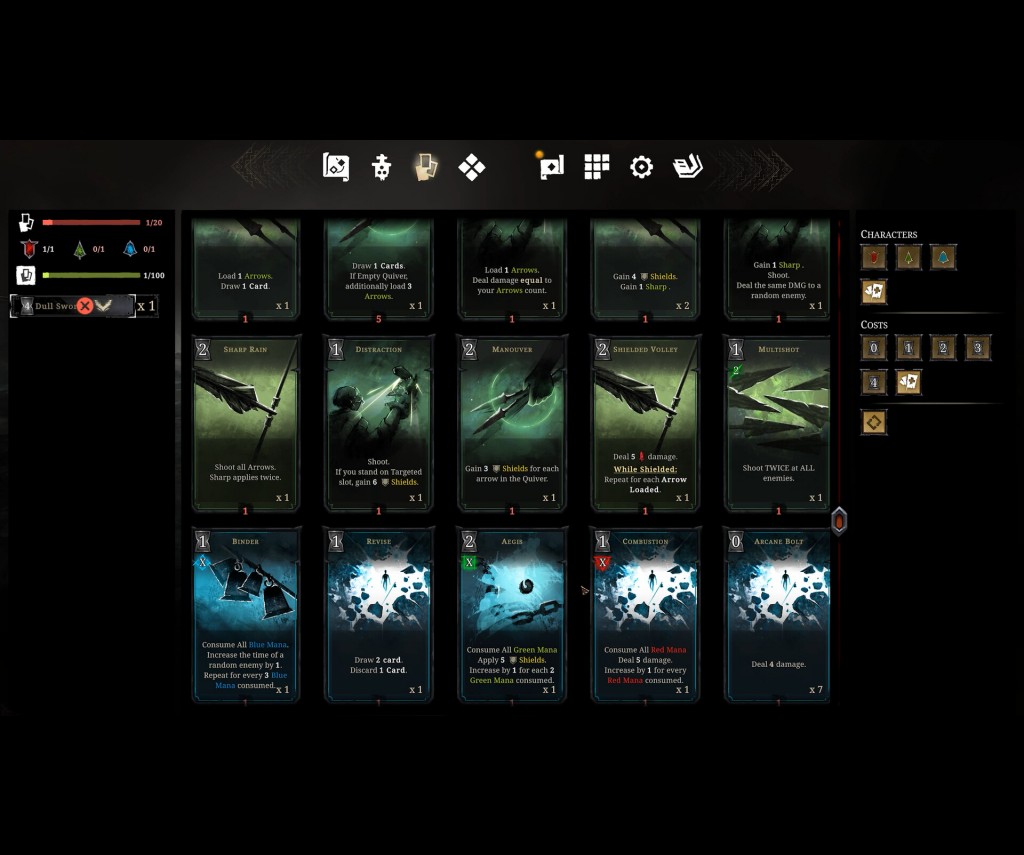
This might not seem like a big deal, but what Shards of Order isn't is as much of a selling point as what it is. Some of the gameplay bones are similar to what you'd expect from a deck-builder in a post-Slay the Spire world, but Shards of Order is very notable not a rogue-like. Instead of being centered on repeated runs with a deck that you start from scratch each time, Shards of Order is instead a narrative experience with one deck that players build and change as they progress.
Build Your Weapon
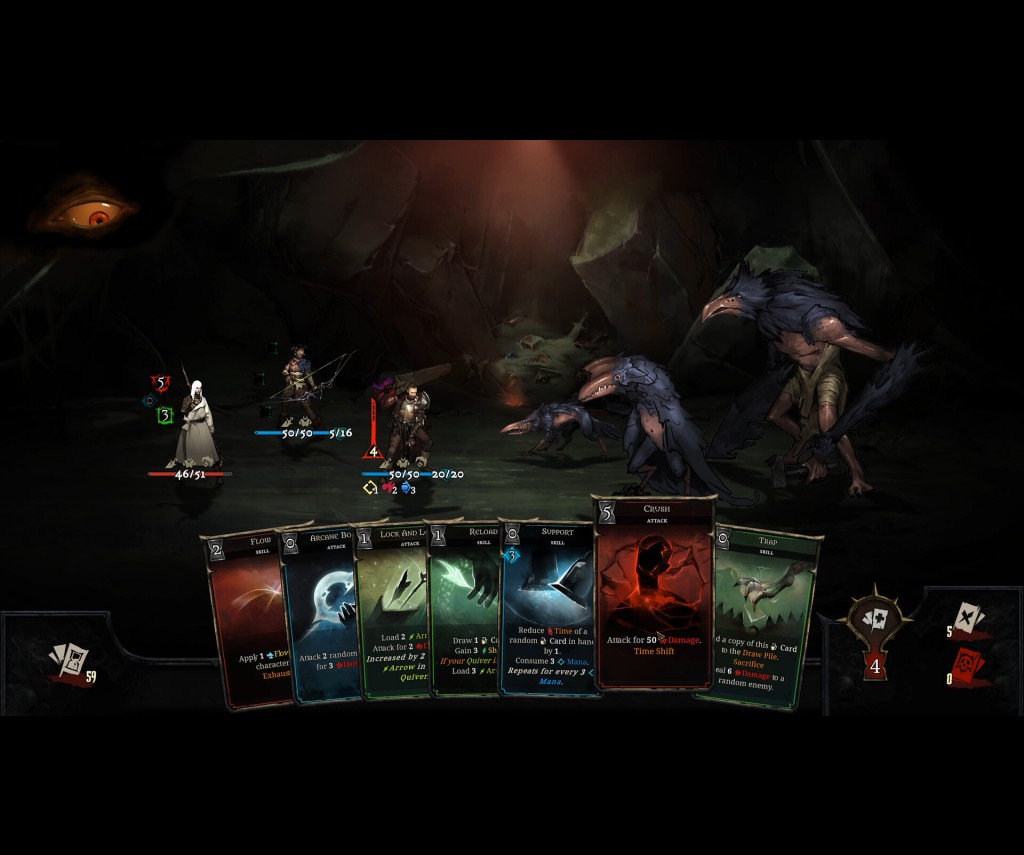
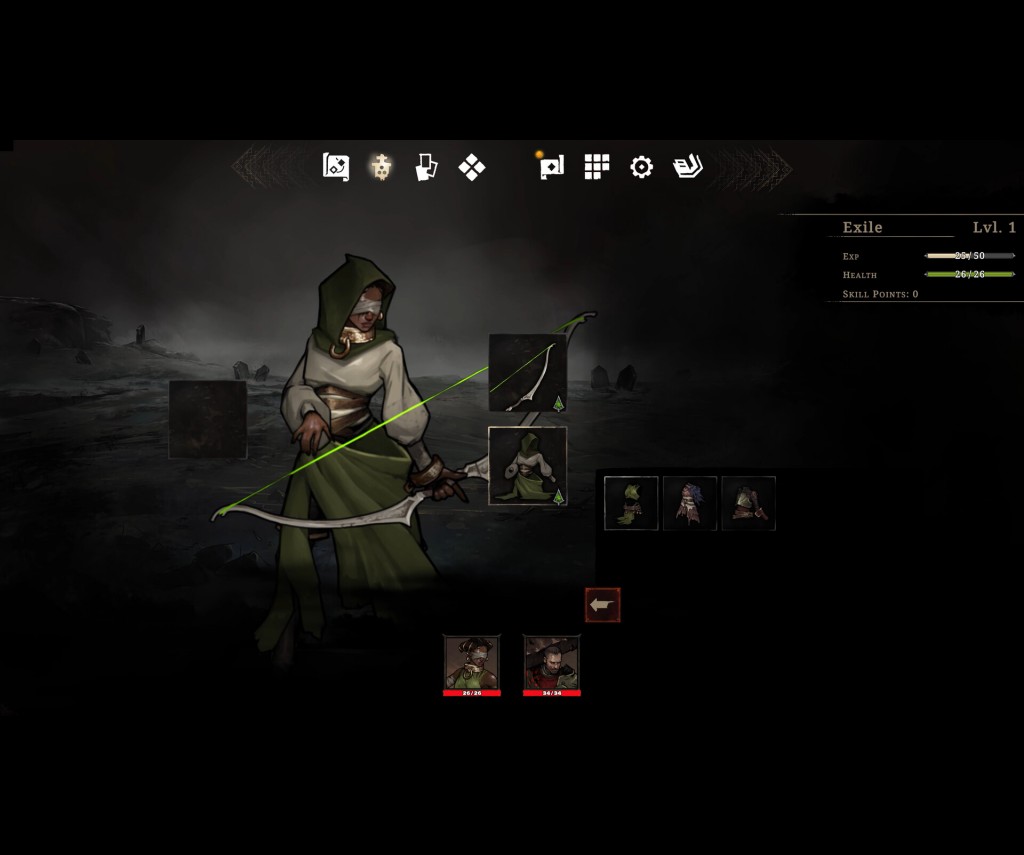
In Shards of Order, players control a team of three characters as they fight their way through a dark, violent medieval-era fantasy world that feels like a mix of Darkest Dungeon and Dark Souls. There's only one deck, though, and all cards are character-specific, so there's not only skill expression in choosing cards to unlock for a hero but also in how to balance the deck between the soldier, rogue, and mage.
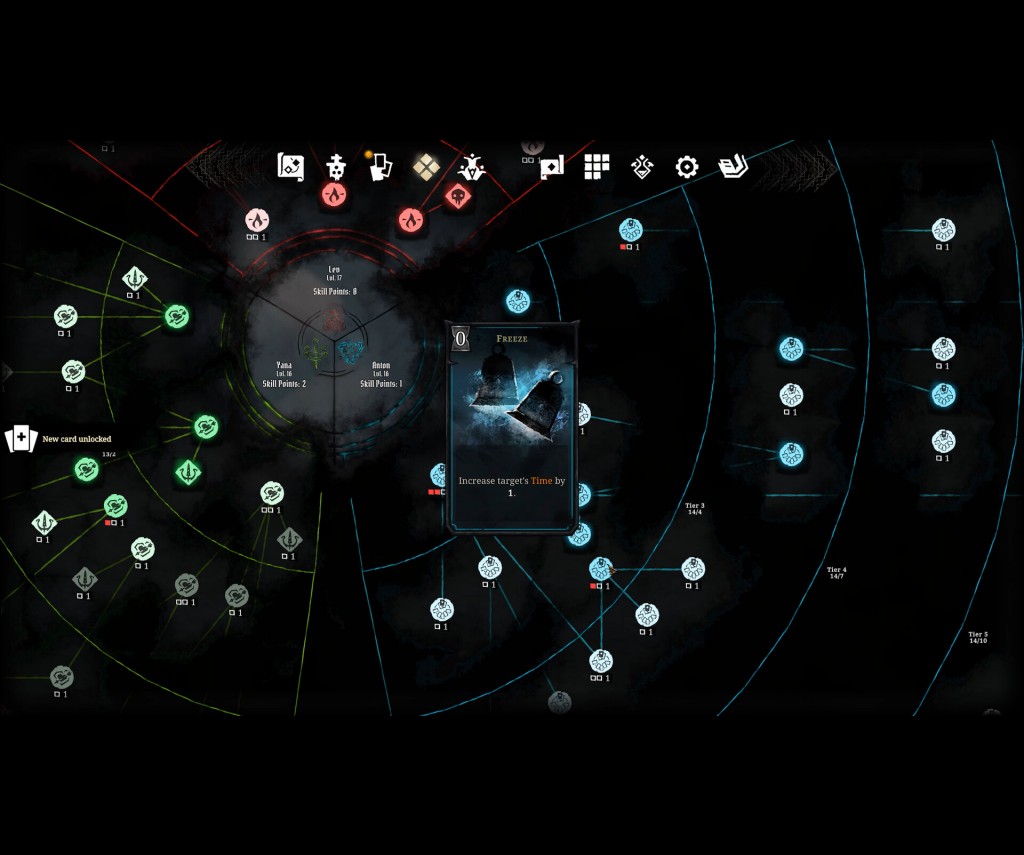
Some cards are unlocked via story progression, but most are found and upgraded through a massive upgrade web to sell skill points in. It's actually fairly intimidating, and tiers of unlocks open up pretty quickly. Fortunately, players can respec skill points, so they aren't punished for exploring upgrades they later find wanting.
So how much build diversity is there for each character? "Enough, but not too much" is a boring answer, but it's how things feel. You can focus on different combos with cards, but each character is still going to fit vaguely into the same archetype. However, equipment opens up more diverse options, and figuring out how the three characters could not only contribute in combat but also truly synergize was the meat of getting better at the game.
Time to Fight
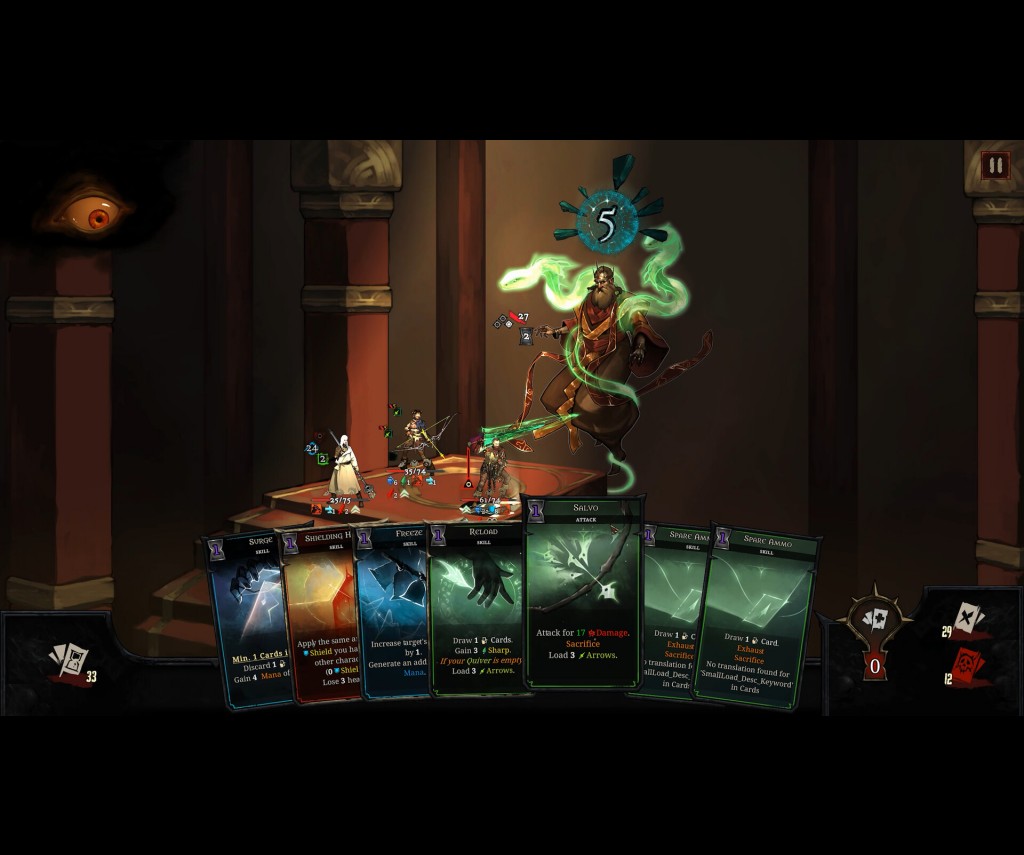
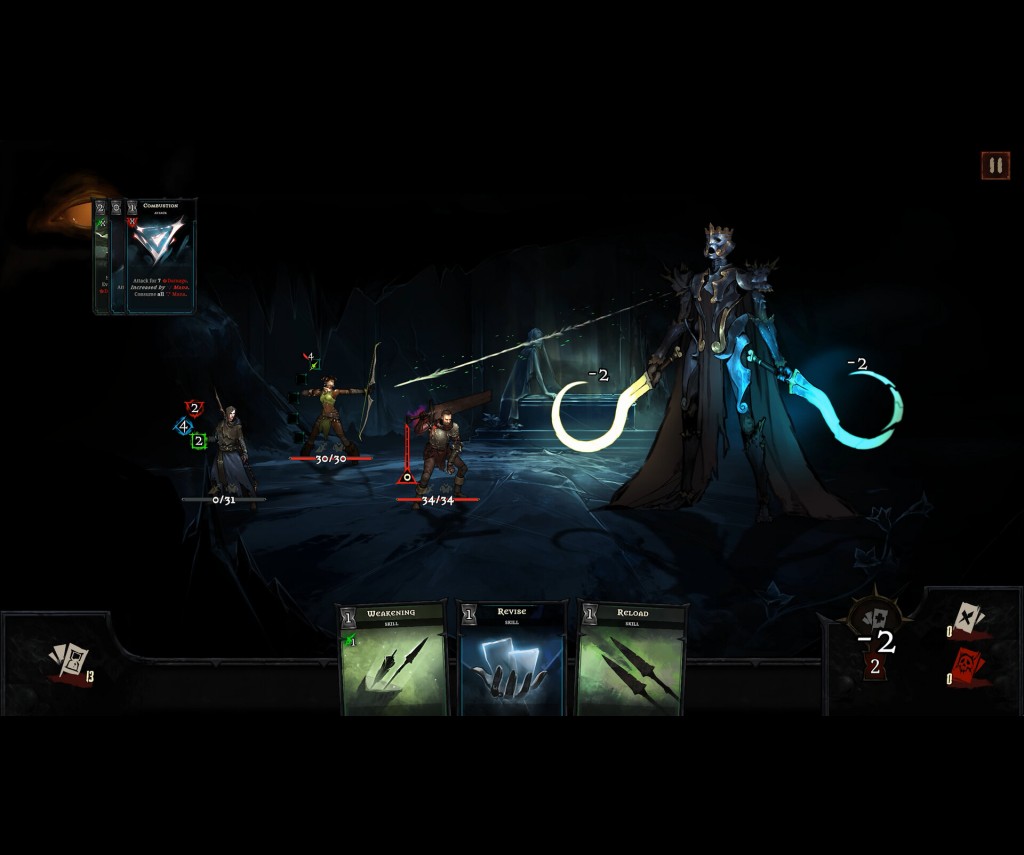
Shards of Order also breaks away from some common mechanics or the genre in combat, though plenty will be familiar to veterans. Cards are drawn; cards cost points. Cards do damage or grant buffs and debuffs. However, neither characters nor players have a finite pool of mana, action points, or any other limiting resource. Instead, each enemy has a constantly down-ticking clock above its head, and cards have time costs that roll it down. When an enemy's clock hits zero, they act. The effect is, in some ways, similar to a mana pool, but each enemy being on their own clock opens up interesting strategy for when to burn time and how to manipulate clocks with abilities. You can also "over-spend" time beyond an enemy's clock, and overflow will roll over into their next countdown.
Moreover, each of the three heroes has their own health pool and can be taken out of the fight independently. Their cards in the deck turn into revives, and the threshold to bring someone back goes up each revival in a fight - along with some other negative effects.
It's a lot going on at once, but it's easy to digest. Once I kind of hit a flow for when to do what, what kinds of enemies to focus on or leave alone, and how to move my characters around the three standing spaces in each encounter. Overall, the combat is a delight, and the game's linear nature keeps everything tight and intentional, unlike some of the more random spikes and valleys games with randomized runs can end up with.
Readers may come across some negative feedback about an early difficulty spike causing issues, but the first major zone received a balance adjustment before I played the game. I can't speak to how much changed, but the difficulty rollercoaster throughout Shards of Order felt right. Some bosses were quite challenging, but never in a way that felt too frustrating or took more than a handful of attempts - and some strategy adjustment - to take down.
Establishing Order
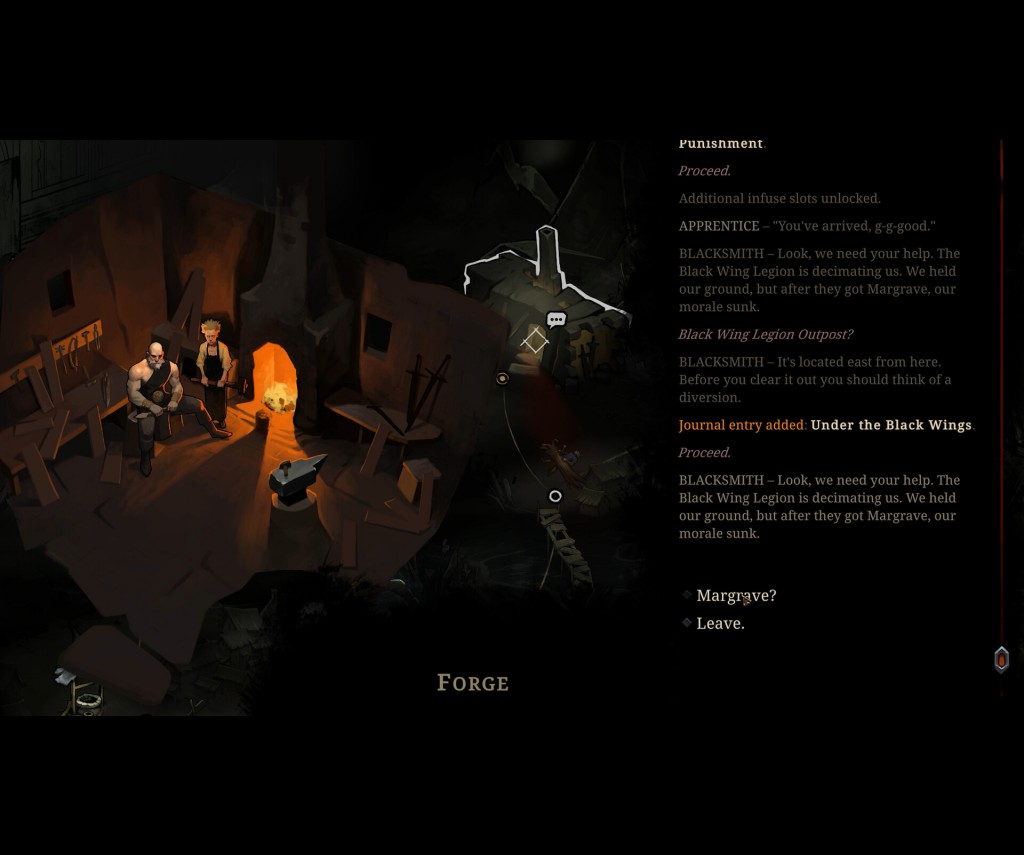
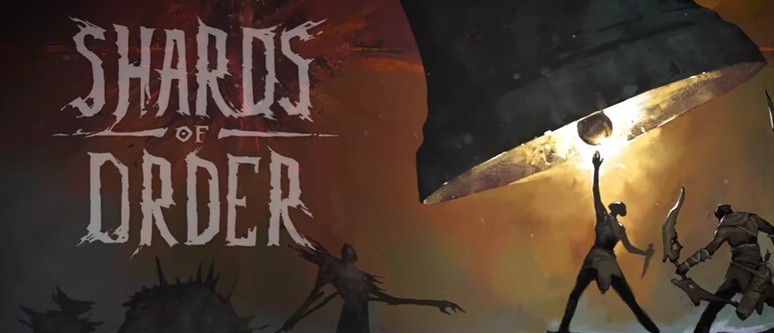
As a linear experience, there's obviously story, and it's here that things become a little more hit or miss. In short, the land's "Laws" - artifacts that govern basic forces like memory, time, death, and more - have fallen into disarray. Some are missing, some are being abused, but it's all bad news for a world that's fallen into absolute chaos. Each of the three player characters has their own history and goals, and it's all... fine? The game succeeds more with its vibe than with the specifics of its story, and while I deeply enjoyed the overall atmosphere and fantastic visual design, I often couldn't tell you exactly what my current goals were or how they fit into the bigger picture.
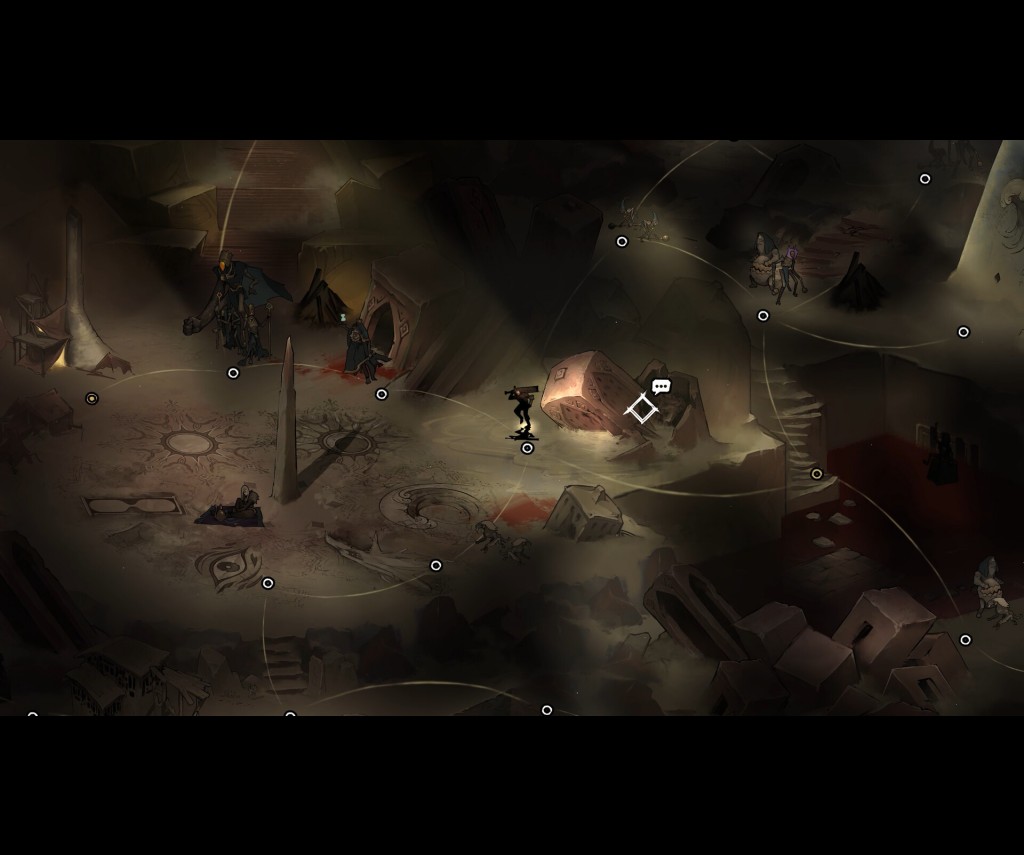
Map and mission navigation also aren't perfect. Players navigate several environments by moving a character icon between nodes, some of which house battles, some dialogue, etc. There's not too much backtracking to be done, but quests do often require going somewhere or doing something then returning to the quest-giver. However, there's no visual indication of where objectives are located, and nodes don't have labels visible by default, so more than once I found myself clicking around big swaths of the map trying to find the right building to bring something back to. It's not a big deal, and it doesn't diminish the overall experience much, but it's a quality of life thing that I'd like to have seen handled better.
I've had a blast with Shards of Order. I have qualms with some of the narrative presentation and would have loved to see more quality-of-life features in the overworld, but the deck-building and combat are top-notch, as is the art style and overall visual presentation. The game's linear structure, which creates a purposeful, escalating experience, is also a plus, making this an easy recommendation for fans of the genre.
As always, follow Hooked Gamers on Instagram for news updates, reviews, competitions and more.
8.5
fun score
Pros
Engaging combat and deck building, beautiful visuals
Cons
Uneven narrative, some navigation frustrations