Why we need more games like Singularity

Feature
We speak to Brian Raffel about Raven Software and Singularity
They were inspired by their love of sci-fi and fantasy and went on to create a handful of interesting titles, many alongside id software.
WINNING THE RAFFEL
In 1997 Activision purchased Raven Software for $12,000,000 USD. This allowed them to branch out and work with other companies to acquire the rights to licensed products to adapt into games. The most popular of which perhaps being Marvel and Star Wars.
They developed some great games that were not necessarily masterpieces, but surprisingly charming and unique.
In the year 2000, they released Soldier of Fortune for the Dreamcast and PC. It was a military action game based on the magazine of the same name. At the time of its release, it was known for its absurd violence allowing the player to dismember enemies in up to 23 different areas of their body depending on where they were shot.
Sure the story, characters and level design weren't the most original even back then, and you could probably see everything that the game had to offer in under five hours, it was still a breath of fresh air to see a shooter that didn't hold any punches.
The sequel - Soldier Of Fortune 2: Double Helix performed significantly better in terms of critical praise, however it only ended up selling a little over 150,000 copies, and some outlets speculated that it was released in a rush state so as to not cannibalize the sales of Raven's upcoming Star Wars games.
Regardless of what people thought about their games, Raven Software was flourishing under its new leadership.
A RAVEN EXPANDING ITS WINGS
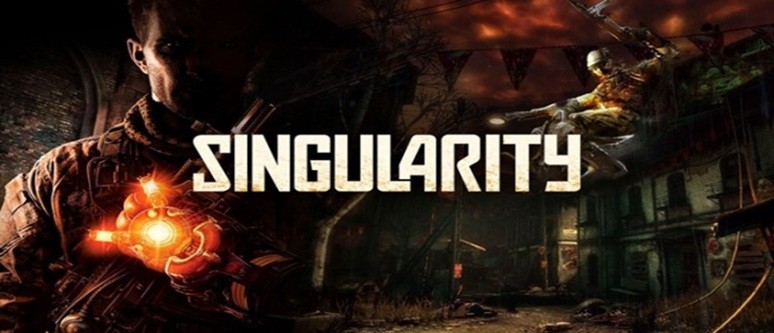
In 2008, they announced their first new IP in a while with Singularity. The game was a first person shooter that felt very much like Bioshock, Half-Life, and pieces of Metro 2033 thrown in.
It was scheduled to be released in 2009, however due to many development hurdles, the game was eventually scaled back and released in a suitable state that met with positive enough reviews, yet many critics and fans alike felt as though it could have been so much more.
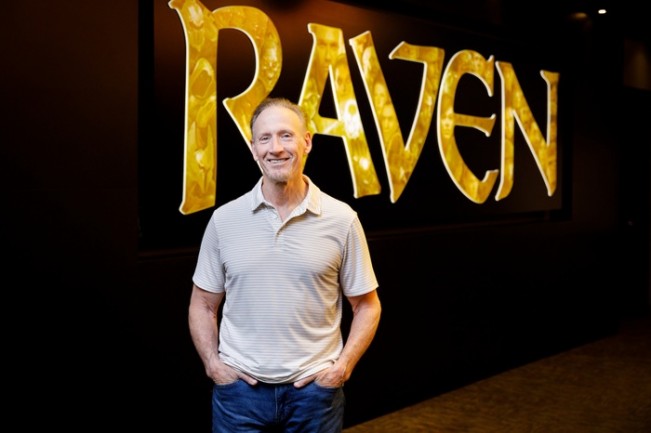
In my interview with Brian Raffel prior to his recent retirement, the former vice president of Raven Software went into detail explaining why so much had to change for the final version of Singularity that was eventually shipped in June of 2010.
Brian Raffel addressed the notable differences between the version of Singularity showcased at E3 2009 and the final retail release, attributing the shift to the inherently fluid nature of game development. He explained that over a multi-year project, ideas must naturally evolve as a team identifies which elements succeed and which fail during the playtesting and brainstorming phases. Raffel noted that for a new IP, this evolution is particularly pronounced because the developers are simultaneously establishing the game's tone, mechanics, and identity. While he admitted that specific reasons for every change are difficult to recall after fifteen years, he emphasized that the radical transformation was simply the result of a necessary refinement process aimed at delivering the best possible final experience.
When questioned about the technical challenges facing Singularity, particularly regarding rumors that the ambitious E3 2009 demo relied on high-end hardware that complicated console ports, the response highlighted significant performance hurdles. According to lead developer Keith Fuller, the project struggled with serious optimization issues across all platforms. At one stage, at least half of the game's maps were non-functional on the PS3, while several others exceeded the memory limitations of the Xbox 360. Even on high-end PC builds, performance remained a major concern, with frame rates frequently dropping during intense combat sequences.
The development history of Singularity reveals a complex tug-of-war between ambitious creative visions and the pragmatic pressures of the 2010-era gaming industry.
While lead developer Keith Fuller pointed toward severe technical bottlenecks on consoles, Raven Software co-founder Brian Raffel recalls the process differently. Despite the radical changes from its E3 2009 debut, Raffel noted that the game was built on the Unreal Engine—a reliable foundation at the time—and did not recall console porting being an "unusual" challenge. Furthermore, despite industry speculation that the game was delayed to avoid a suicidal release window alongside Call of Duty: Modern Warfare 2, Raffel clarified that the blockbuster shooter had no bearing on the project's timeline.
From its inception, Singularity was firmly intended to be a AAA experience. The core concept was a personal one, born from Steve Raffel's imagination. He envisioned the Time Manipulation Device (TMD) as the central hook, set against the atmospheric backdrop of a 1950s Soviet island—a setting inspired by the Raffel brothers' upbringing during the Cold War era. While the story eventually expanded as more writers joined the project, that original foundation of time-bending mechanics and Russian isolation remained the North Star for the development team.
One of the more criticized aspects of the final product was its multiplayer mode, which many felt lacked the depth of the single-player campaign. Addressing whether those resources would have been better spent elsewhere, Raffel explained that the decision was driven by the prevailing industry climate. Even then, there was immense pressure to provide a "winning combination" of both solo and competitive modes to meet consumer expectations—a trend that continues to shape AAA development today. Despite the "rushed" nature of the final build, the team remained committed to delivering a multifaceted package, even as they navigated the shifting tides of creative evolution and technical constraints.
STRAIGHT DOWN THE CALL OF DUTY MINES
Singularity was released to positive critical reception, however it barely sold over half a million copies world wide.
After that a significant number of employees at Raven Software were terminated, and the company was reformatted to be a support studio for upcoming Call of Duty games.
Brian Raffle was interviewed by IGN's Ryan McCaffrey after the release of Call of Duty Black Ops Cold War in 2020 about them primarily doing support work and if they "missed being back in the driver's seat" to which Brian responded that all the games they were working on went "quite well", however in 2008 "the economy took a big dive that's the big factor" And that "At the time Activision had to choose where the marketing would go, and we were a new title I think a good title and I think it proved out in the reviews"
He later went on to say that they were around today because they adapt. He also stated that they were fortunate enough to work with Treyarch on Black Ops. And that they had a lot of fun working with the other studios.
Raven at one point stated that they wanted to make their own Call Of Duty game set in a modern time period. The closest they have gotten to this would be with the 2016 remaster of Call Of Duty 4 - Modern Warfare Remastered.
They also did the bulk of the campaign for Call Of Duty Black Ops 6 (which I found to be excellent).
However, after working as a support studio for so long, many fans of Raven Software before they started working exclusively on Call Of Duty wonder if they will ever be able to make their own games again.
WHY IT MATTERS
Video games to many are an art form. However they can be an expensive art form.
Sure there are plenty of great indie titles that were made for a shoestring budget, however the reality is most games coming from big studios are becoming more expensive than ever as they get bigger and their developers ambition grows.
This is nothing new, an artist's vision clashing with their producer's budget is a tale as old as time. Also, the landscape has changed drastically in the 15+ years that Singularity has been released. Very few companies are willing to invest big money into a single player or multiplayer game with no micro transactions.
It’s a shame that we live in an era where not having microtransactions can be viewed as a positive but that is a different rant for a different day.
Games like Singularity matter because they come from a place of passion. It is not just Singularity, who knows how many great games we missed out on because stubborn executives wanted to sway the developers in a different direction.
I asked Brian about if he thinks Singularity might ever get a remake or remaster, and his response was "Honestly, I think it's unlikely. There are so many new ideas people want to pursue, and a long list of existing titles that could be candidates for remakes. That said, I certainly wouldn't mind seeing it happen someday."
But hey, with so many games from the PS3/XBOX360 era getting remasters and remakes, who knows?
As always, follow Hooked Gamers on Instagram for news updates, reviews, competitions and more.