How Arabic Games Are Fighting The War On Error


OPINION
For a long time, the Western side of the world has been positioning the Arabic countries as an enemy through the use of media. Games are no exception, but now we see a backlash from the Arabic game development community. Their work seems to hold an important lesson for us all.
A Voice Through Gaming
Although Garshasp and Unearthed carry the message and deliver it by both appealing to and perhaps offending some Western gamers, there is a another game that could hold a more hopeful future for the Arabic games industry. Mir Mahna is a historical FPS that turns the usual sights of Western shooters upside down by having players liberate Iran from the Dutch invading force. Mir Mahna often contains hostage scenes that have the player shooting the guy NOT wearing a headscarf. Like the aforementioned games, Mir Mahna is based on actual historical events, and follows national hero Mir Mahna as he frees Iranian cities from their colonizers. Hopefully the game will also free other native games industries from the colonist ideologies that they currently adhere to. The great thing about Mir Mahna is that it has full Iranian government support and is being heralded as a national treasure for the population to celebrate. This may seem like a Modern Warfare for Muslims, but the difference is that Mir Mahna aims to build a sense of cultural identity by using historical events and mythos; a vital rejuvenation for those countries who have been invaded by the Western allies.
During this ‘war on terrorism’ and many other past events, the Western world has invaded countries with arms and exploitative policies, supported only by their rhetoric ‘moral principles’ in order to quell an over exaggerated threat to a hypocritical regime. Modern Warfare is a way of securing government support for these policies by writing a fictional future in which America overcomes various terrorist organizations. As they say, the winners write the history and it seems games like Modern Warfare are not afraid to further ignite the unfair prejudice already present in the West. This is why Iran and other Arabic countries have just as much (if not more) right to herald a game like Mir Mahna. The game has become a national hit and stands as one of the most significant cultural artifacts to come out of the nation over the last decade. The developers and government hope that the game will spread outwards and become treasured amongst gamers and consequently share true Arabic culture and history with a global audience.
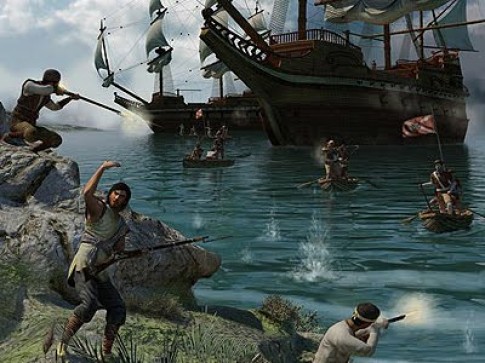
It’s hard to predict the impact a game like Mir Mahna will have, and it does seem unlikely that it will strike a particularly loud chord within the huge American game companies that seem happy to be doing the US government’s work for them at times. For now, it is the start to something much bigger for Arabic games and cultural identity. I can only hope it hits a nerve elsewhere and we begin to see the big games showcase a more balanced and fair cultural representation. These games go towards humanizing the Middle East by teaching of their histories, their cultures and their identities, and it is wonderful to know that computer games are the medium being used to perform such an act. Hopefully people can respect the developers’ efforts, even if they do not appreciate them so much, and we see further growth in the Arabic games industry too. Diversity seems essential for the global industry to mature and encouraging foreign industries to invest in these cultural artifacts would certainly bring about a change in the imperialist attitude that some of the biggest selling games in the industry have acquired.
The Neo-Colonialism Of Video Games
At a time when computer and video games are a global phenomenon, played by millions every hour of the day, they act as a carrier of ideologies and a tool of great power. Unfortunately, this has been abused to promote political affairs and government schemes in a way that worryingly resembles propaganda. The War on Terror and the popular games that have come from this are the biggest culprits in this case. While shooting terrorists mostly seems just and without real consequence, it does unfortunately cause harm through a subtle but powerful message. No one wants to talk about politics in gaming, but when we do let’s hope that in the future we can discuss the fair representation of different cultures, and not the questionable motives of certain game design choices. Thanks to the eager developers in countries like Iran, we may reach that state of fair representation in games sooner rather than later, and then we can happily leave this branch of politics out of discussions around gaming.